
I Almost Didn’t Make It
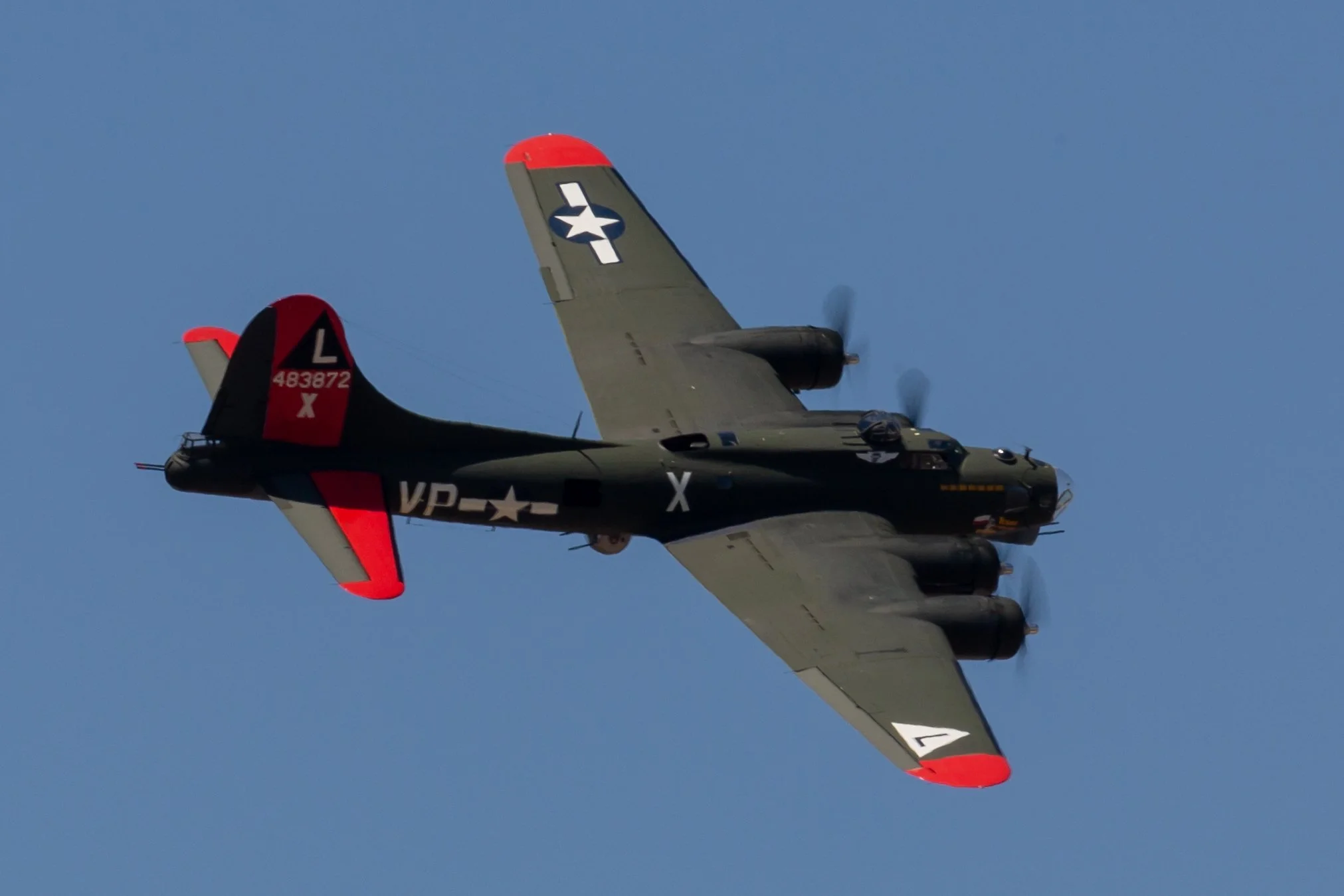
B-17 Flying Fortress Photo: NARA Archive
The big body sped into a climb, relieved of the falling bombs. The trucks of the German supply line below burst into fireballs. The energy wave thumped his plexiglass windshield with each blast. Crouched in a bubble, his ears adjusted to the whining roar of the prop wash. From his view in the tail, they were leaving earth.
Four twelve-hundred-horsepower Wright cyclone engines pushed the crew higher into the moon dashed clouds. He froze under a flak jacket larger than the one you wore at your last dentist appointment. His parachute is hung on a hook behind a steel door. He’ll likely never be able to fetch it in the moment he’ll need it. He is cold, lonely, and marking time to his inevitable death. He had six weeks to live, tops, once in-theatre.
Unrelenting nerves stretched his eyes wide in search of black puffs of flak and the fly specks of the Luftwaffe. He only had two lifelines. The first; the radio speckled voices of the nine other crew members. The second; long chains of fifty-caliber bullets awaiting his trigger finger.
Called to action, double streaks of light banged from the turret gunner behind him. Incendiary rounds returned. The curved tracers met in mid-air. Thudding the aluminum fuselage, they passed through the rear turret. His friend’s voices dropped from nine to eight.
He screamed into the radio, “Corkscrew right, Top Kick. Fall down over your wingtip. They’re coming down from eleven o’clock!” The steel door supporting his back fell to earth. He stared through the mist into space, floating. And then he whispered to the enemy. “Line up you Nazi bastards.” His pistol-gripped joysticks shook when he sprayed a double-barreled firehose of flaming onions arcing across the sky. The Iron Cross of the Luftwaffe peeled open. A spark of fire popped and the target flared out into the English Channel. His double gun, vibrated from the mount, laid in his lap, while the red hot tips glowed behind the rudder.
Thus was the life of a World War II tail gunner in a B-17 Flying Fortress.
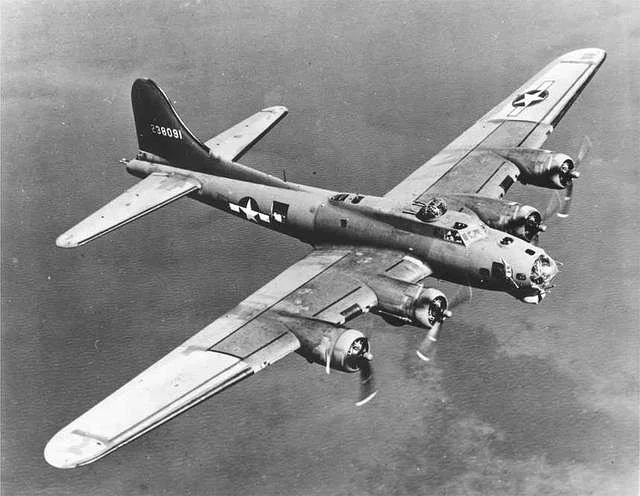
B-17 Flying Fortress Photo: NARA Archive
Sometimes, I catch more fish than my brother. To staunch my needling, Jud will remind, “You know I was the second in our family to fire a fifty cal.” Our dad, Staff Sergeant Julius Gordon Boles of the United States Army Air Service (USAAS), was the first. He shot two at once. He flew stinger in a Flying Fortress.
Around 1933, or thereabouts, our birthing mother, England, and our weird, but loveable older sister, Europe, developed a pest problem. American exterminators, with a nation full of guts, pride and know how, showed up in B-17 Flying Fortresses.
B-17s were flying orbs-of-ordinance-delivery. It sported thirteen air-cooled Browning M2 .50 caliber machine guns, shot from both 180-degree turrets and 90-degree flexible cones of lead spewing violence. After slicing and dicing through the Luftwaffe, they delivered nearly two and half tons of political persuasion falling from egg racks behind the cockpit.
Moving from fore to aft, the bombardier in the chin worked two barrels poking out the front door. Just behind him, the navigator had access to two cheek guns, one on each cheek of the plane.
Two turrets were positioned topside. The first housed two turret-fifty cals connected at the actions, searching the sky above them. The gunner bucket was mounted, or actually slung under, the 360-degree-rotational top turret. With a twist of his wrist and pull of his trigger, the turret gunner twirled and fired. The radio operator had access to a single-barreled turret just behind him, when he wasn’t directing talk traffic.
Sitting in the fetal position, the ball turret gunner protected the belly of the plane with nothing between him and earth but targets and a long drop. Just aft of the bomb bay doors were two more flexible waist guns. The ergonomic equivalents of jackhammer rifles, they pointed out the sides like mirror twins.
The tail gunner fiddled twice pipes. He watched their six. Seventeen ‘sky dragons’ supported a rotating crew of ten, all interchangeable except pilot and co-pilot. If you were next to a gun, you were ordered to use it.
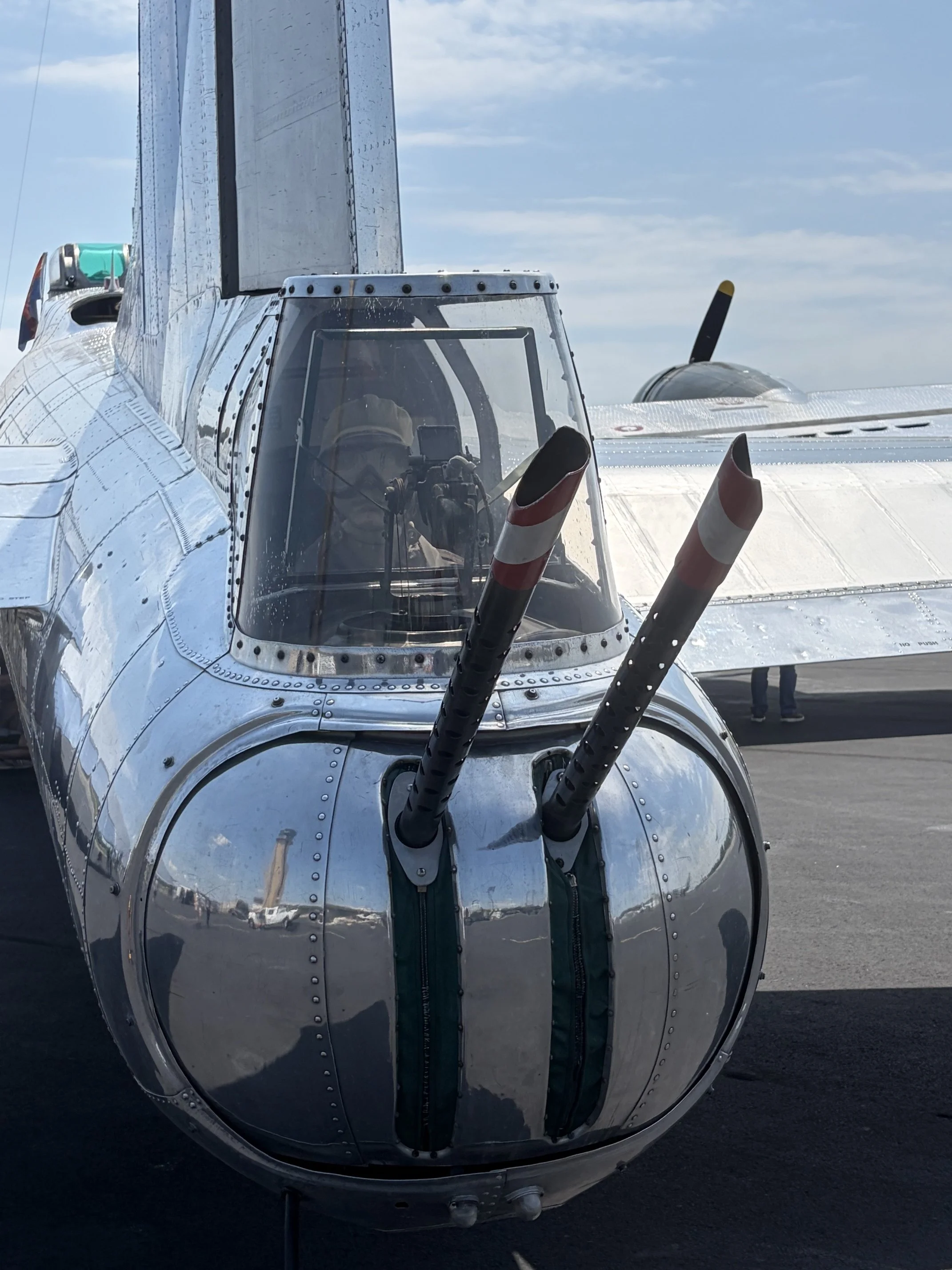
B-17 Tail Gunner, or Stinger, position with two .50 Caliber M2 Browning Machine Guns Photo: Chad Boles
The B-17 had a rumbling top speed of 300 miles per hour, an operational range of two-thousand miles and the certainty of enemy engagement on every mission. Adding to the pressure was a warning delivered before takeoff, “If you hit the Vatican and not the marshaling fields, don’t come back.” History has shown big wins, genetic in our cowboy-balls-out culture, are yoked with heavy, nation mourning loss. About a third of all departing B-17s never returned home.
Setbacks be damned! The Army brass, in their oft maligned wisdom, decided this was a story worth telling. Leveraging the movie industry wasn’t a new idea. Enter Warner Brothers and the winning smiles of Clark Gable and Jimmy Stewart. The silver screen tempted the adventurous with soul candy. The rolls of the Army Air Corp exploded from a few thousand to two million, in six years, half of them volunteers. From the Bronx to the swamps, patriotism was hot.
To dispatch any honorably offered combat merit for my dad, he was never deployed. What his generation did do - was what needed doin’.
Dad was stationed in El Paso before final transit to Reseda. As the story goes, dad trained bombardiers on bombsites, swabbed gun barrels, and took flak from learner-anti-aircraft guns while riding shotgun in target tows. They all filled Goodyear self-sealing fuel tanks with avgas and tires with air. Patching flak holes was like cleaning the gun range - everyone was responsible. I like to think for fun, they strafed the West Texas desert.
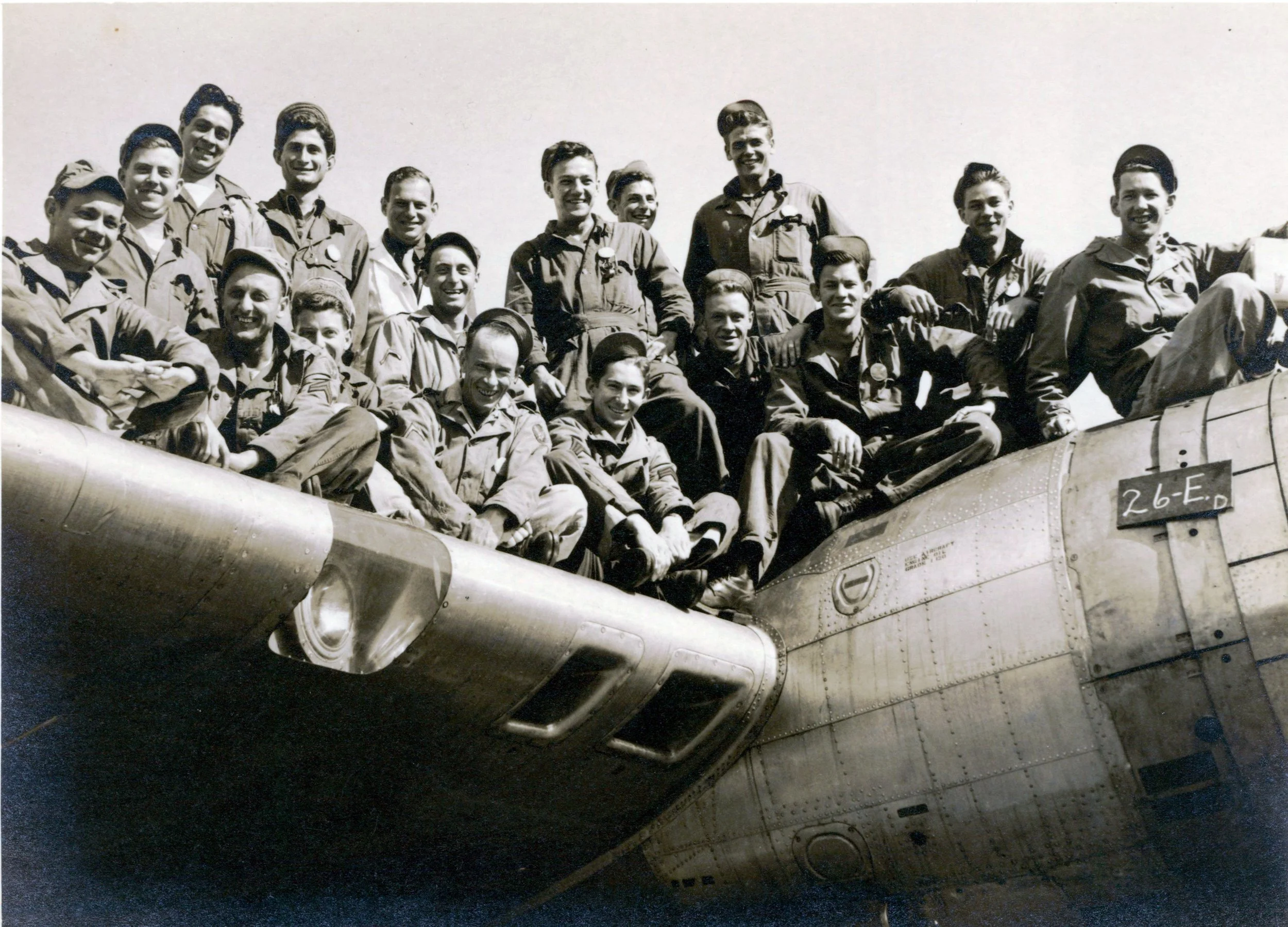
B-17 Aerial Radar Repair Team Photo: Chad Boles
You’ll notice dad stretching his hands, fidgeting, at the left end of that wingtip schoolyard. Not an adult in sight. Need more evidence of America’s bright future in the 1940’s? There’s dad standing next to Captain America in a Master’s caddy uniform.
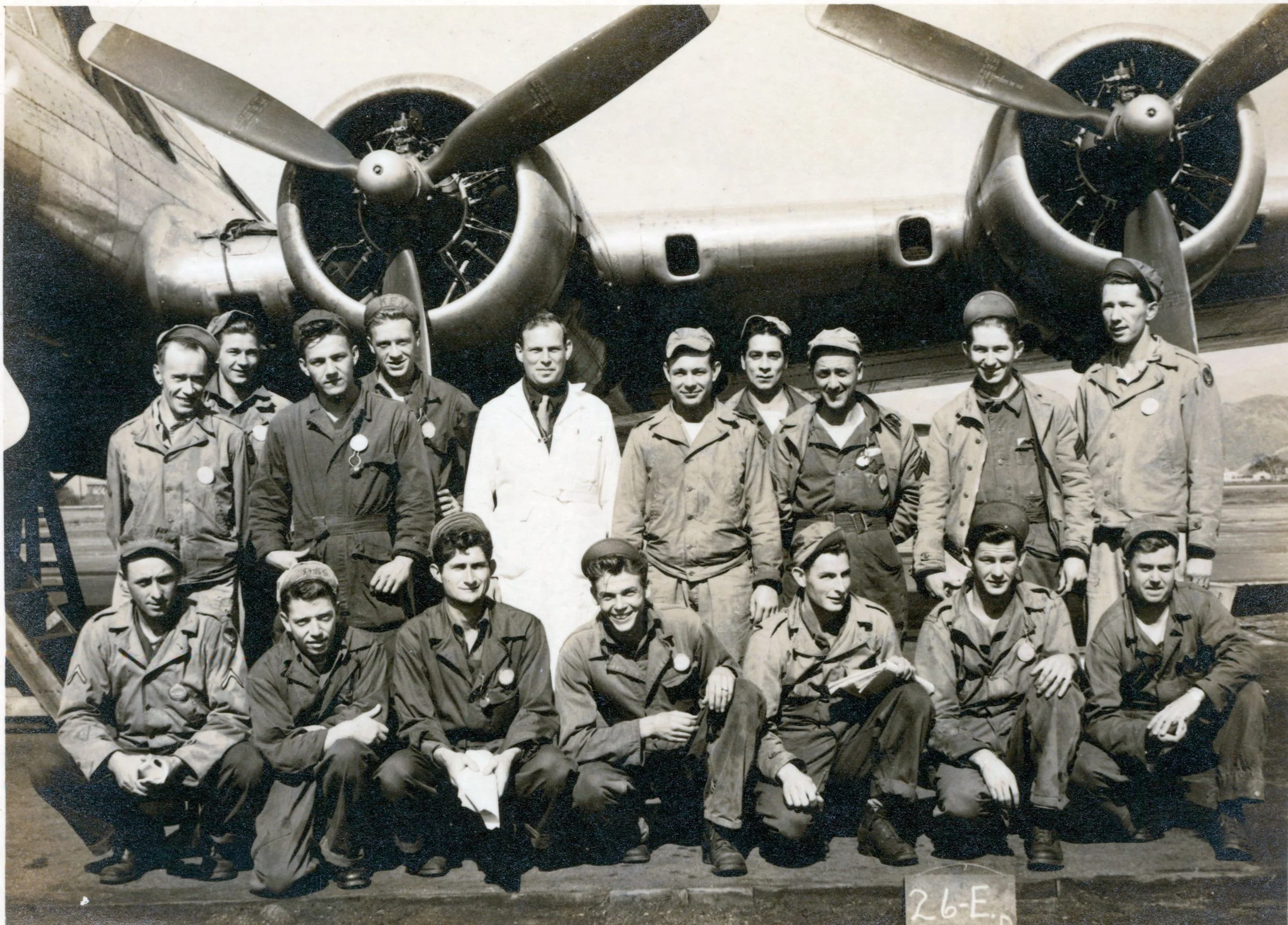
B-17 Aerial Radar Repair Team Photo: Chad Boles
Under dark of night, or so I’m told, Dad and Team Bombsite were transferred to Reseda near the war’s end. The entire west coast remained in beans-and-bullets mode for the ongoing Japanese homeland bombardment. Trucks, airmen and planes scurried, flew and landed in preparation for final victory. They were tuning ports and loading ammo when, mid-paperwork shuffle, we dropped a couple of game changers on Hiroshima and Nagasaki. The war ended and closed the book on the most violent and humiliating chapter in global history.
By war’s end, B-17 crews were battle tested. Flying Fortress crews flew in tight groups, wingtip to wingtip. The formations, so acrobatically maneuvered, repelled Nazi flies altogether. They feared the lead soup cooked up by chin, tail and turret guns of an airborne armada.
Its success embodied the American spirit of a full throttle learning curve. Nonetheless, the B-17 finished World War II with the highest fatality rate of any plane in the Army Air Corp. Even still, the B-17 delivered fistfuls of victory on hundreds of thousands of missions, and dropped thousands of tons of bombs for three different fighting forces over four continents.
Devout, introspective and prone to silence, Dad was exactly what the Army Air Corp wanted; a human cinder block; form-poured and cured. He drew the, ahem, short-duty straw on a wild ride and was grateful for the experience. Like most, enforcing the edicts of Uncle Sam was just one of his early paying jobs.
A North Florida native, Dad was the oldest of seven. He found his way back and landed on the sandy white banks of Blackwater Bay, the watercolored home of Eglin AFB. My summertime playlists on the Redneck Riveria rocked with offshore lightning flashing to the drum and burp of practice bombs and Warthog runs. As a grown man a long way from home, spanish moss still fringes my daydreams.
Dad married mom, Mary Elizabeth. She was the youngest girl of six, and deserves a story of her own. It was a varied and sundry mashup. The whole deal clicked together like Lincoln Logs.
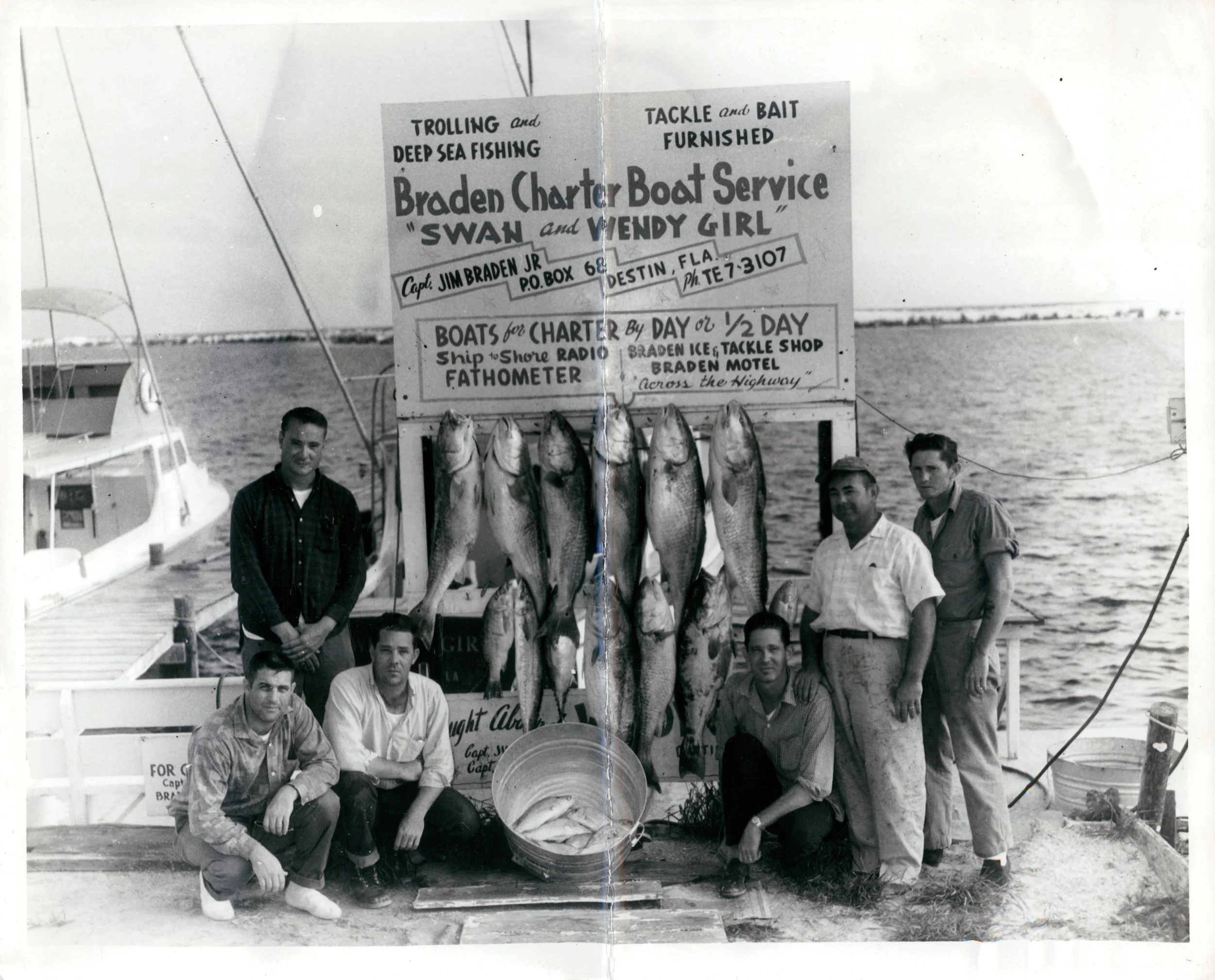
(R-L) William C. “Billy Conner” McCombs, Thomas S. “T Sol” Johnson, “Frances” L. Johnson, James E. “Jimmy” Johnson, Julius G. “Gordon” Boles, Don Photo: Chad Boles
Like most fathers, dad wasn’t perfect. On occasion, he’d get so angry his brain pistons seized up, like an old tractor engine. His two bushy eyebrows, in the shape of cammed rocker arms, jerked into a lurch and hung motionless on his forehead. His coal dark eyes, glaring at his two child prodigies, cracked. The left blinked intermittently. He swole up like a super-heated radiator. My brother and my worries shifted from another possible seizure to a much less permanent ass whipping, as he exhaled steaming bible verses and Bagdad, FL hocus pocus. It bordered on the kind of vulgarity that got a grade schooler’s attention. Dad’s mechanical glitches were caused by Jud, me or, sadly, his actual brain pistons. By testimony and example, he taught us there was no redeeming value in anger.
Jud followed dad’s size ten double-wides into the Army. When asked, Dad told him, “Kicking in doors and shooting people in the face sounds fun, but try to find something in the Army you can do in civilian life.” All Jud heard was “Bombs.” Selective listening runs in the family.
Their service thread continued in things that go boom, although, probably not exactly as dad advised. Jud muscled through a long, spicy career in Explosives Ordinance Disposal. He is amused by my reloading hobby of various thirty-calibers.
One day at the boat ramp, I was yammering about powder measures and my worst fear. He laughed and said, “Maybe put an eye out little buddy, but to blow yourself up you’re gonna’ need C-4 and some blasting caps.” He rush-propped the boat down off the trailer into Pensacola Sound. Noticing my stare, he said. “What?” Then he shook his head. “Go park the truck.”
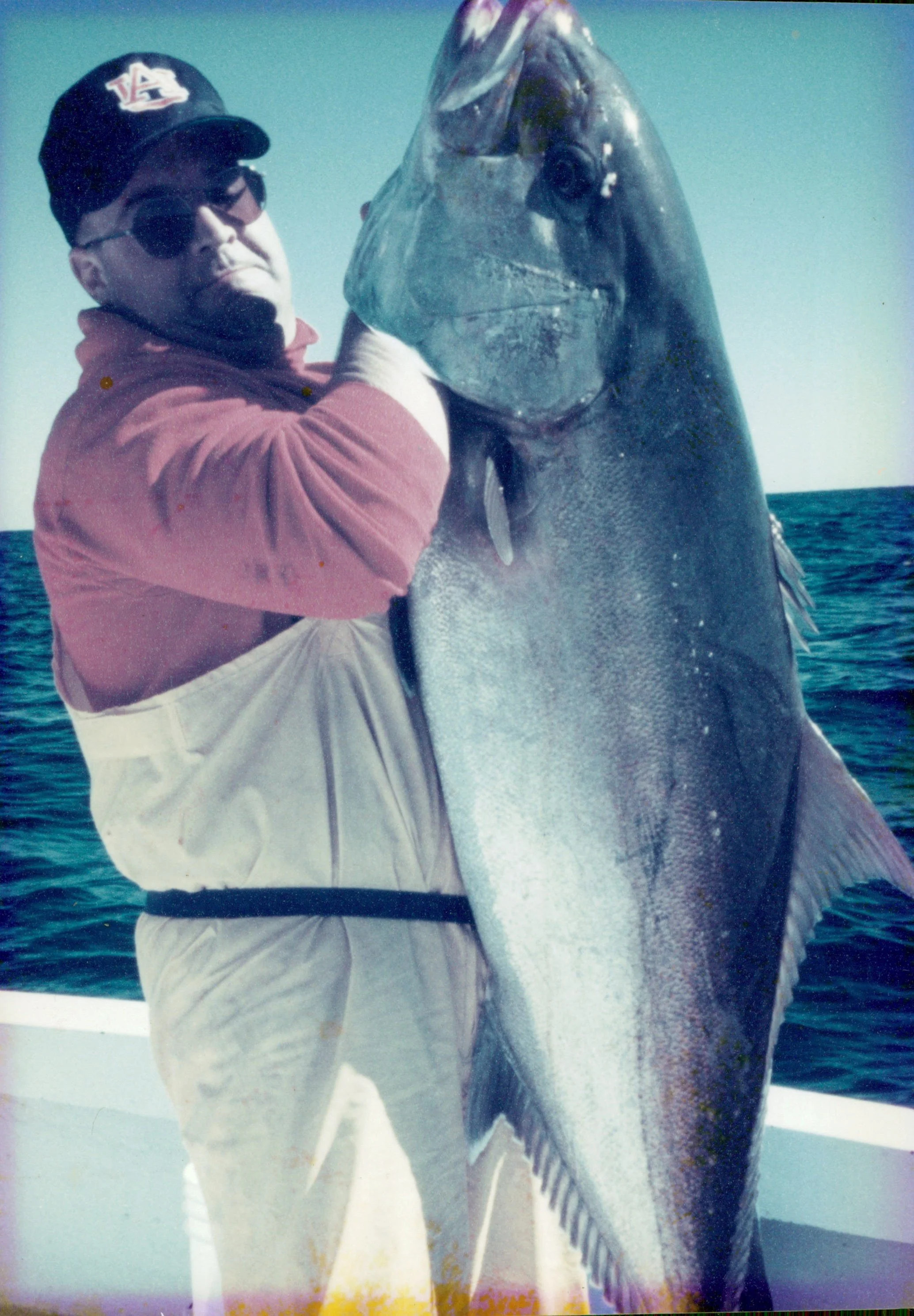
Jud with Amberjack Photo: Chad Boles
Many times, my brother and I unintentionally feed slot-busting redfish to bottlenose dolphin prowling around his Pathfinder 22. The immediate loss is frustrating, but the release is state law.
But one time I saw him do it on purpose. He fed a bull red to a big momma swimming by in the emerald green water. She measured from the jack plate to the center console and was big around as a pier pylon. Lying prone on the bow and hand feeding it probably broke all kinds of conservation rules. Neither of us cares. Salvation has that effect. That runs in the family, too.
Thanks for your service. Let’s see if we can keep this thing clicked together. God Bless America.

Author with redfish